
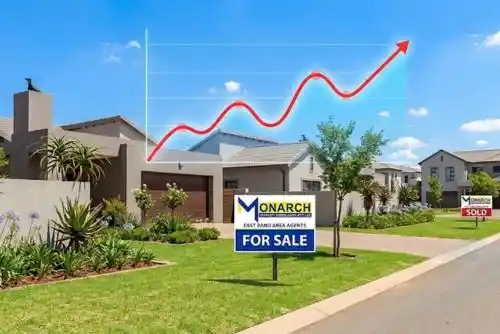
SARB Interest Rate Hike & Forecast: What it Means for East Rand Property
The South African Reserve Bank (SARB) has announced a pre-emptive 25-basis-point increase, pushing the repo rate to 7% and bringing the prime lending rate to 10.5%. Coming off the back of an uptick in April consumer inflation, which hit 4%, this move is designed to protect long-term economic price stability and curb imported inflation risks.
While a rate increase is never welcome news for household budgets already stretched by rising municipal tariffs, water, and fuel costs, it is important to look at the numbers rationally. A 0.25% adjustment is modest—it is a moderate fine-tuning rather than a major tightening of financial conditions. In fact, a 10.5% prime rate aligns perfectly with the stable, baseline averages South Africa experienced between 2016 and 2019.
For property buyers and sellers across the East Rand—from Benoni and Boksburg to Kempton Park—the local market remains deeply rooted in long-term demand. Property continues to be one of the most stable wealth-building assets available.
What the Numbers Mean for Your Monthly Bond
When structural shifts happen in the economy, practical financial planning becomes essential. To put this 25-basis-point increase into perspective, the direct monthly impact on a standard 20-year home loan remains highly manageable:
- R1 Million Bond: Monthly repayments increase by roughly R165 to R175.
- R2 Million Bond: Monthly repayments rise by approximately R330 to R350.
Because local banks remain highly motivated to sustain housing demand, lending conditions are becoming increasingly competitive. Financial institutions are actively working to cushion affordability pressures by offering attractive cost-inclusive bonds and zero-deposit home loans. There is currently no indication that banks are tightening credit criteria or pulling back support for qualified buyers.
Market Shifts: The Rise of Convenience and Sectional Titles
The combination of higher living expenses and fuel prices is accelerating structural shifts in buyer preferences across Gauteng. On the East Rand, this is translating into distinct, high-demand trends:
- The Flight to Lock-Up-and-Go Security
With buyers keeping a closer eye on monthly costs, low-maintenance townhouses and cluster homes in secure estates are seeing consistent traction. Areas offering balanced estate living—such as Brentwood Park, Ravenswood, and premium lifestyle hubs like Ebotse Golf Estate—are attracting strong interest.
- Prioritizing Commuting and Strategic Locations
Escalating transport costs mean buyers want to live closer to work, schools, and central commercial hubs. Properties with effortless access to major transport routes, corporate nodes, and the OR Tambo infrastructure corridor (especially in Kempton Park hubs like Glen Marais or Van Riebeeck Park) hold a major competitive edge.
- Smart Resizing
As household dynamics evolve, smaller families, young professionals, and retirees are actively seeking out compact, energy-efficient homes. Modern sectional-title properties cut down on upkeep, lower municipal rates burdens, and frequently feature cost-saving additions like pre-installed solar or backup power.
The Future Outlook: Where Are Interest Rates Headed Next?
For prospective buyers and sellers looking at the long-term horizons, understanding the forward-looking economic landscape is essential.
Currently, domestic financial markets are pricing in the potential for one further 25-basis-point adjustment before the end of the year. However, economic analysts emphasize that this trajectory is highly fluid and dependent on global economic indicators.
Key factors shaping the upcoming interest rate forecast include:
- Global Central Bank Policies: The stance taken by major international central banks regarding their own inflation battles.
- Geopolitical Stability: Energy and supply chain pressures, particularly out of the Middle East, which directly influence local fuel costs.
- Currency Performance: A strengthening rand, bolstered by proactive domestic monetary policy, which acts as a shield against imported inflation.
If global inflationary pressures begin to ease in the coming quarters, the local interest rate outlook could stabilize much faster than initially expected, paving the way for potential rate relief further down the line.
Why Waiting for Rate Cuts Could Cost You
A common mistake in a shifting interest rate cycle is putting off a property purchase to “wait for the perfect time.”
History shows us that the South African property market moves in cycles. While buyers sit on the sidelines waiting for rates to drop, the underlying demand does not disappear—it builds up. As stock shortages begin to emerge in highly sought-after suburbs, localized property prices face upward pressure. Buying a well-priced home in the current market allows you to secure the asset at today’s value, meaning you will benefit directly from capital growth when the interest rate cycle turns.
Your Next Steps
Navigating a changing market comes down to accurate data and sound advice. If you are curious about how these economic adjustments impact your local property value, or if you want to gauge your buying power in the current market, let’s look at the options together.
The Outlook: Markets are currently pricing in a potential further 25-basis-point adjustment before the end of the year, heavily dependent on global inflation and geopolitical stability. If international pressures ease, economists expect the domestic forecasting outlook to stabilize rapidly heading into next year.